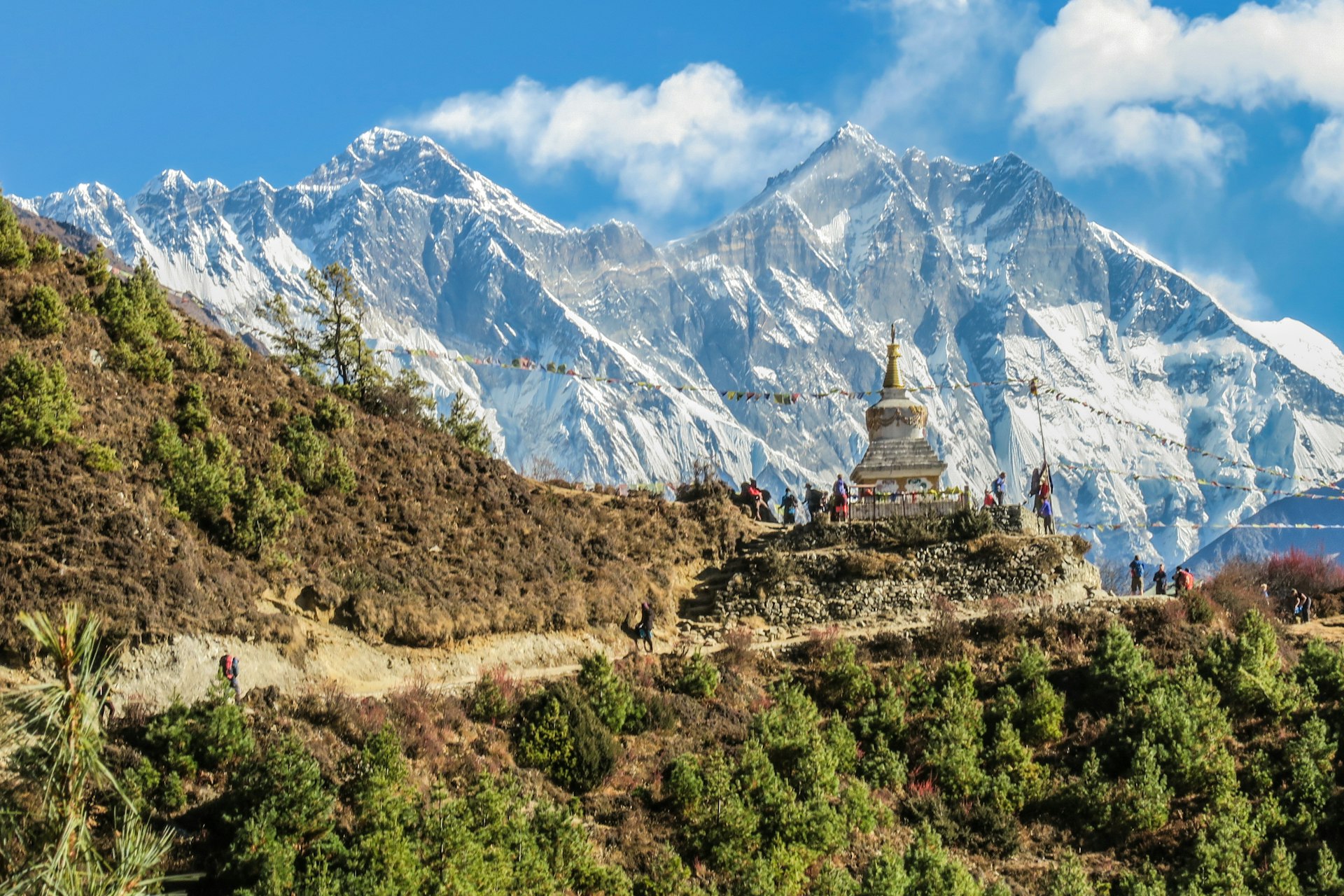
Nepal sits in a unique climatic zone shaped by the Himalayan range to the north and the subtropical plains of the Terai to the south. This geography produces four very distinct seasons — each with its own character, its own rewards, and its own challenges. Choosing the right time to visit Nepal can make the difference between crystal-clear summit views and a week of cloud and rain, or between comfortable nights in a teahouse and shivering through sub-zero temperatures at altitude.
This guide breaks down every month of the year so you can plan with confidence — whether you are coming to trek the Himalayas, explore Kathmandu’s temples, go wildlife spotting in Chitwan, or celebrate one of Nepal’s extraordinary festivals.
Nepal’s Four Seasons at a Glance
| Season | Months | Best For |
|---|---|---|
| Spring | March, April, May | Trekking, climbing, rhododendrons |
| Summer / Monsoon | June, July, August | Jungle wildlife, culture, lush landscapes |
| Autumn | September, October, November | Best overall — trekking, views, festivals |
| Winter | December, January, February | Low-altitude culture, Terai wildlife, quiet trails |
Month-by-Month Nepal Travel Guide
January
Weather: Cold and dry. Temperatures in Kathmandu average 2–12°C. Above 4,000 m, nights drop well below −15°C.
Trekking: Lower elevation trails (Ghorepani–Poon Hill, Langtang Valley below 3,500 m) are accessible and snow-dusted beautiful. High passes and routes above 4,500 m are challenging and require full winter gear.
Wildlife: Excellent time for Chitwan and Bardia National Park safaris. Dry conditions push animals towards water sources, making sightings of rhinos, tigers, and elephants easier.
Festivals: Maghe Sankranti (mid-January) — a harvest festival celebrated with sesame sweets and river bathing.
Crowd Level: Very low. Hotels and lodges are empty. Good negotiating power on prices.
Overall Rating: ⭐⭐⭐ — Best for budget travellers, wildlife lovers, and those seeking solitude.
February
Weather: Still cold but improving. Kathmandu averages 3–18°C. Rhododendron forests at lower altitudes begin to bud.
Trekking: Late February is when the trekking season starts warming up. The Annapurna foothills and the lower Everest region become increasingly comfortable. Some high passes remain snowy.
Wildlife: Continued excellent conditions in the Terai national parks.
Festivals: Losar (Tibetan and Sherpa New Year) — celebrated with great colour in Namche Bazaar, Bouddhanath, and Swayambhunath. Dates vary; usually falls in February or early March.
Crowd Level: Low, beginning to pick up in the second half of the month.
Overall Rating: ⭐⭐⭐ — A hidden gem month, especially for those who want to avoid crowds.
March
Weather: Spring has arrived. Kathmandu averages 7–23°C. Lower valleys warm up quickly; high trails still cold at night.
Trekking: One of the best months of the year. Trails are not yet crowded, the sky is increasingly clear, and rhododendron forests below 4,000 m burst into bloom — white, pink, and crimson.
Wildlife: Good wildlife conditions before the heat arrives in the Terai.
Festivals: Holi (Festival of Colours) — Nepal celebrates with enthusiastic powder-throwing in Kathmandu’s streets. Maha Shivaratri at Pashupatinath draws hundreds of thousands of Hindu pilgrims.
Crowd Level: Moderate. Climbing season begins; teams start arriving at Base Camp.
Overall Rating: ⭐⭐⭐⭐⭐ — Excellent month, especially for the Annapurna and Langtang regions.
April
Weather: Warm and mostly clear. Kathmandu 11–26°C. The best pre-monsoon trekking weather arrives.
Trekking: Peak spring trekking season. All major routes are fully accessible. Rhododendrons are at full bloom. Everest Base Camp is alive with expedition teams. The Annapurna Circuit is at its finest.
Wildlife: Getting hot in the Terai; wildlife viewing less comfortable but still possible.
Festivals: Nepali New Year (Bisket Jatra in Bhaktapur) around April 14 — one of the most spectacular chariot processions in South Asia.
Crowd Level: High. Popular teahouses and lodges book out fast, especially on the EBC and Annapurna routes.
Overall Rating: ⭐⭐⭐⭐⭐ — One of the two best months for trekking in Nepal.
May
Weather: Hot in the lowlands (Kathmandu 15–30°C) with increasing cloud build-up in the afternoons. High-altitude trails remain good until mid-May.
Trekking: Good in the first half of the month before pre-monsoon clouds roll in. High passes (Thorong La, Renjo La, Cho La) are at their most accessible before June snow melts create muddy approaches.
Climbing: The Everest summit window typically falls in mid-to-late May.
Wildlife: Very hot in the Terai; most wildlife retreats to deep forest.
Overall Rating: ⭐⭐⭐⭐ — Good for determined trekkers; book everything well in advance.
June
Weather: Monsoon arrives. Kathmandu 19–29°C but heavy rainfall for much of the day. Leeches appear on forest trails. Landslide risk on mountain roads.
Trekking: Most trekkers avoid the main routes. However, the rain-shadow regions — Mustang, Dolpo, and Manang — lie north of the Himalayan barrier and receive very little monsoon rainfall. The Upper Mustang trek is exclusively available during the monsoon season and is spectacular.
Culture and Scenery: Nepal turns brilliantly green. Rice paddies are planted, waterfalls run at full strength, and Kathmandu’s temples are free of crowds.
Wildlife: Baby animals appear throughout the Terai. Excellent birding in lowland forests.
Overall Rating: ⭐⭐⭐ — Challenging for standard trekking; ideal for rain-shadow treks or cultural exploration.
July
Weather: Peak monsoon. Heavy rain most afternoons. Temperatures moderate (Kathmandu 21–28°C) but humidity is high.
Trekking: Not recommended on standard routes. Upper Mustang and Dolpo remain viable for experienced trekkers.
Culture: Indra Jatra (late August–September) preparations begin. The green valleys are breathtaking for photographers willing to embrace the rain.
Wildlife: Good time for birding. Jungle trails in Chitwan are quiet but wet.
Overall Rating: ⭐⭐ — Only for those specifically seeking rain-shadow trekking or cultural immersion.
August
Weather: Monsoon continues but begins to ease in the second half of the month.
Trekking: Very similar to July. Rain-shadow areas remain the best option.
Festivals: Krishna Janmashtami — celebrated with great devotion at Patan’s Krishna Mandir.
Wildlife: Monsoon greenery peaks. Some of Nepal’s most dramatic waterfalls are accessible this month.
Overall Rating: ⭐⭐ — Last month of wet season. Some adventurous trekkers find it rewarding.
September
Weather: The monsoon retreats. Kathmandu 18–26°C. Skies clear dramatically in the second half of the month.
Trekking: Autumn trekking season begins. Trails are freshly washed, vegetation is intensely green, and the Himalayas appear brilliantly clear. September combines the lushness of monsoon with the clarity of autumn.
Festivals: Indra Jatra (Kathmandu’s most colourful street festival) — a week of chariot processions, masked dances, and the public appearance of the living goddess Kumari.
Crowd Level: Moderate, building through the month.
Overall Rating: ⭐⭐⭐⭐ — Underrated month. Fewer crowds than October, equally beautiful scenery.
October
Weather: Near-perfect. Kathmandu 11–24°C. Crystal-clear skies, stable temperatures, and low humidity. The gold standard for Nepal travel.
Trekking: The best single month to trek in Nepal. Visibility is at its peak — on clear days you can see Himalayan summits from Kathmandu’s rooftops. Every major route is at its finest.
Festivals: Dashain (Nepal’s biggest festival — 15 days of family reunions, kite-flying, and animal sacrifice) and Tihar (Festival of Lights, Nepal’s answer to Diwali) both fall in October or November. These are extraordinary windows into Nepali culture.
Wildlife: Good game viewing as animals move after the monsoon.
Crowd Level: Very high. The most popular month. Book teahouses and internal flights months in advance.
Overall Rating: ⭐⭐⭐⭐⭐ — The single best month to visit Nepal for most travellers.
November
Weather: Still excellent early in the month. Kathmandu 7–21°C. High passes may receive their first significant snow by late November.
Trekking: Wonderful in the first three weeks. One of the least crowded months of peak season. Lower altitude rhododendron forests begin turning autumnal gold.
Festivals: Tihar (if it falls in November). Mani Rimdu — a spectacular Sherpa festival at Tengboche Monastery with masked dances and fireworks.
Crowd Level: Moderate, tapering off toward the end of the month.
Overall Rating: ⭐⭐⭐⭐⭐ — Outstanding, especially for those who prefer fewer crowds than October.
December
Weather: Cold and crisp. Kathmandu 3–16°C. High-altitude passes accumulate significant snow.
Trekking: Low-altitude classics — Ghorepani Poon Hill, Langtang Valley, Gokyo Lakes (below the passes) — are manageable and beautiful in clear winter light. High routes require full mountaineering gear.
Wildlife: Best month for Chitwan and Bardia safaris. Cool, dry conditions are ideal.
Crowd Level: Very low. Prices drop significantly. You can often negotiate excellent rates on accommodation.
Overall Rating: ⭐⭐⭐ — Excellent for low-altitude trekking, wildlife, and budget-conscious cultural travellers.
Choosing the Right Season for Your Trek
For the Everest Base Camp Trek
Ideal: April–May and October–November
The EBC route is high and exposed. You need stable weather and clear skies to make the most of the mountain views, and manageable temperatures at night in Gorak Shep.
For the Annapurna Circuit
Ideal: October–November and March–April
The Thorong La Pass (5,416 m) is the crux — it can be impassable in heavy snow (January–February) and in monsoon conditions (June–August). The circuit is at its most beautiful in autumn.
For Langtang Valley Trek
Ideal: March–May and September–November
Langtang is closer to Kathmandu than either of the above routes and sits in a relatively sheltered valley. It is one of the best options for first-time trekkers and is less crowded year-round.
For Upper Mustang Trek
Ideal: May–September
Upper Mustang is unique in that its best season runs during the monsoon months, when the rain-shadow keeps skies clear and the permit-controlled access limits trekkers to a manageable number.
For Wildlife Safaris (Chitwan / Bardia)
Ideal: October–April
The dry season concentrates animals around rivers and water holes, making sightings far more reliable. The cooler months (December–February) offer the most comfortable game-drive conditions.
Nepal’s Most Important Festivals by Season
| Festival | Month (Approximate) | Significance |
|---|---|---|
| Maha Shivaratri | February/March | Pashupatinath pilgrimage |
| Holi | March | Festival of Colours |
| Nepali New Year (Bisket Jatra) | April | Bhaktapur chariot festival |
| Rath Yatra | June/July | Chariot procession, Patan |
| Indra Jatra | September | Living Goddess Kumari procession |
| Dashain | October | Nepal’s biggest festival |
| Tihar | October/November | Festival of Lights |
| Mani Rimdu | November | Sherpa masked dances, Tengboche |
| Losar | February/March | Tibetan New Year |
Timing your visit to coincide with one of these festivals adds an entirely new dimension to your Nepal experience.
Practical Tips for Every Season
Spring and Autumn Trekkers: Book internal flights (Kathmandu–Lukla, Kathmandu–Pokhara) at least 60 days in advance. Seats sell out completely during peak months.
Winter Trekkers: Pack a sleeping bag rated to at least −15°C for high-altitude routes. Teahouses may not heat rooms above 3,500 m, and hot showers can be unavailable.
Monsoon Visitors: Pack quick-dry clothing, waterproof covers for your bag, and leeches socks if trekking in forested areas. Consider Kathmandu-based cultural itineraries instead of long mountain routes.
Year-Round Advice: Travel insurance covering emergency helicopter evacuation is non-negotiable for any trekking itinerary above 3,000 m.
Plan Your Perfect Nepal Trip with Mantra Adventure
Our team in Kathmandu has navigated every season in Nepal’s mountains for over 15 years. We know which teahouses open early in spring, which high passes are first to clear after snowfall, and which festival dates to plan around for the most extraordinary cultural experiences.
Whether you are dreaming of October summit views from Kala Patthar, rhododendron-lined trails in April, or a moonlit safari in Chitwan in December, we will build an itinerary that makes the most of the season you choose.
Get in touch with our team to start planning.
Published by Mantra Adventure | Kathmandu, Nepal | mantraadventure.com

Adventure travel expert based in Kathmandu, Nepal.