
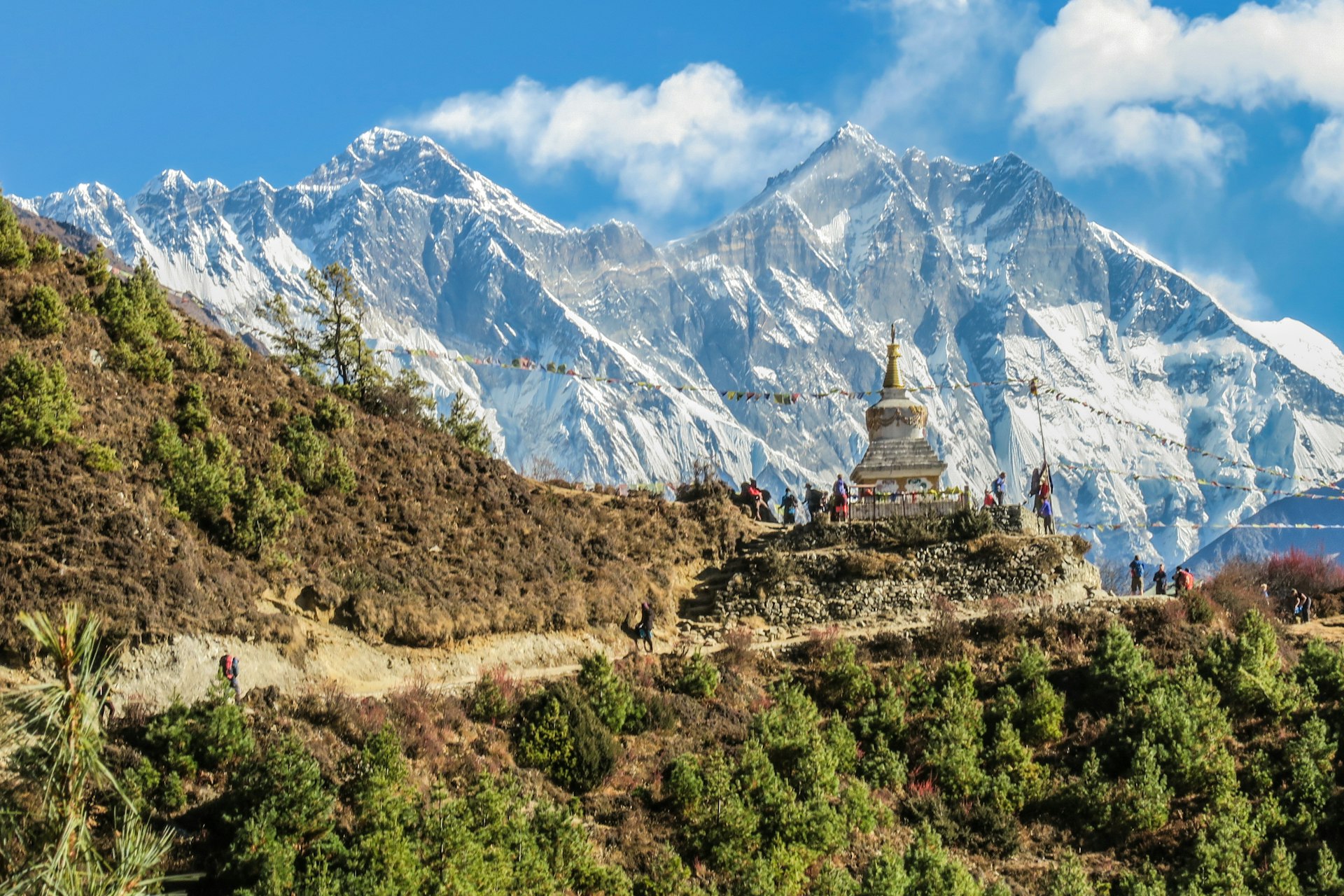
If Everest Base Camp is Nepal’s most famous trek, the Annapurna Circuit is its most loved. Circumnavigating the entire Annapurna massif — the tenth highest mountain range in the world — the circuit takes trekkers through an astonishing variety of landscapes in a single journey: subtropical river gorges, terraced rice fields, medieval trading villages, high-altitude desert plateaux, glacial moraines, and the prayer-flagged summit of the Thorong La Pass at 5,416 metres.
This is not just a trek. It is a complete Himalayan experience.
Annapurna Circuit: Key Facts
| Detail | Information |
|---|---|
| Maximum Altitude | 5,416 m (Thorong La Pass) |
| Total Distance | 160–230 km (depending on route variations) |
| Duration | 12–21 days |
| Difficulty | Moderate to Challenging |
| Best Season | March–May, October–November |
| Starting Point | Besisahar (from Kathmandu or Pokhara by bus/jeep) |
| Required Permits | ACAP Permit + TIMS Card |
| Daily Walking Hours | 5–8 hours |
Why the Annapurna Circuit Stands Apart
The Annapurna Circuit was first opened to foreign trekkers in 1977. For many years it held the title of the world’s greatest trek — a designation it continues to deserve despite road construction that has shortened some sections over the past two decades.
What makes it extraordinary is diversity. In two to three weeks, you pass through five distinct climate zones, cross the rain-shadow boundary at Thorong La, walk through the ancient walled city of Muktinath, and descend into the world’s deepest river gorge — the Kali Gandaki. The cultural mix is equally remarkable: Hindu farming villages in the lower Marsyangdi Valley give way to Tibetan Buddhist communities in the high elevations of Manang and Mustang.
No other trek in Nepal — arguably in the world — offers this combination in a single journey.
The Annapurna Circuit Route: Day-by-Day Itinerary
Days 1–2: Kathmandu to Besisahar to Bulbule / Ngadi (840 m)
Most trekkers take an early morning bus or jeep from Kathmandu’s Gongabu Bus Park to Besisahar (7–8 hours), the traditional starting point for the circuit. Jeeps now travel further up the Marsyangdi Valley, but beginning at Besisahar or Ngadi gives you the full experience of the lower gorge — lush subtropical forest, small waterfalls, and terraced villages where life has changed little in centuries.
Day 3: Ngadi to Bahundanda (1,310 m)
The trail follows the Marsyangdi River through rice paddies and bamboo groves. The valley narrows and begins to deepen. Bahundanda (“hill of Brahmins”) sits on a ridge with panoramic views of the first Annapurna peaks. Walking time: 5–6 hours.
Day 4: Bahundanda to Chamje (1,430 m)
A beautiful section through dense forest, crossing several suspension bridges over the increasingly powerful Marsyangdi. The valley closes into a tight gorge. Walking time: 4–5 hours.
Day 5: Chamje to Dharapani (1,860 m)
The trail climbs steadily through Tal — a wide, flat-floored valley that was once a glacial lake — and continues to Dharapani, where you cross into the Manang District and the character of the trek shifts. The villages become more Tibetan in appearance: flat-roofed stone houses, mani walls, and prayer wheels. Walking time: 5–6 hours.
Day 6: Dharapani to Chame (2,670 m)
The valley ascends more steeply through dense pine forests. Chame is the district headquarters of Manang — a relatively large town with hot springs, shops, and teahouses. Your first close-up views of the Annapurna II and Lamjung Himal appear. Walking time: 5–6 hours.
Day 7: Chame to Pisang (3,300 m)
The trail climbs through forests and past a spectacular curved rock face (one of the largest natural rock walls in the Himalayas) before opening into the wider Manang Valley. Lower Pisang and Upper Pisang sit on opposite sides of the river — Upper Pisang (a 30-minute detour) offers better views and a beautiful monastery. Walking time: 5–6 hours.
Day 8: Pisang to Manang (3,519 m)
A highlight of the entire circuit. The trail contours above the Marsyangdi on a high ridge with continuous views of the Annapurna Range, Gangapurna, and Tilicho Peak. Arrive in Manang — the last major settlement before Thorong La — with the afternoon free to explore its medieval alleyways and the impressive Gangapurna Glacier viewpoint. Walking time: 5–6 hours.
Day 9: Acclimatisation Day in Manang
This day is not optional. The jump from Manang (3,519 m) to the Thorong La High Camp (4,850 m) over the next two nights is significant, and your body needs time to adjust. The classic acclimatisation hike goes to the Ice Lake (Kicho Tal) at 4,600 m — a strenuous but rewarding climb with extraordinary views of Annapurna III and Gangapurna. Alternatively, visit Milarepa Cave or the Gangapurna viewpoint for a gentler option.
Day 10: Manang to Yak Kharka or Ledar (4,200–4,460 m)
A relatively short walking day, intentionally so — you are continuing to acclimatise. The trail climbs through yak pastures and past teahouses into increasingly barren terrain. Ledar is a small cluster of lodges where altitude-related symptoms begin to be felt more acutely. Walking time: 3–4 hours.
Day 11: Ledar to Thorong Phedi / High Camp (4,450–4,850 m)
Continue up to Thorong Phedi and then the steep climb to High Camp (4,850 m), where most trekkers spend the night before the pass crossing. The views at sunset over the Thorong Glacier are extraordinary. Walking time: 3–4 hours.
Day 12: Thorong La Pass (5,416 m) to Muktinath (3,800 m) — The Big Day
The defining day of the circuit. Most trekkers rise at 4–5am to begin the pass crossing in the dark, aiming to reach the summit before the notorious afternoon winds. The climb from High Camp to the top (5,416 m) takes 3–5 hours — a relentless but manageable ascent on a well-marked trail. At the top, a sea of prayer flags, stone cairns, and the triumphant selfies of several dozen ecstatic trekkers mark one of the great achievements in recreational trekking.
The descent to Muktinath on the western (Mustang) side is long and steep — 1,600 m of drop over 10 km. Muktinath itself is one of Nepal’s most sacred pilgrimage sites for both Hindus and Buddhists: a temple complex with 108 water spouts and an eternal flame that burns from natural gas. Walking time: 8–10 hours total.
Day 13: Muktinath to Kagbeni (2,810 m) or Jomsom (2,720 m)
On the western side of Thorong La you have entered the Mustang rain shadow — a high-altitude desert of eroded cliffs, arid plateaux, and ancient Tibetan trading culture. The landscape looks nothing like the lush valleys you walked through a week ago. Kagbeni is an extraordinary medieval walled village at the gateway to Upper Mustang; Jomsom is the regional hub with an airport connection back to Pokhara. Walking time: 3–5 hours.
Day 14: Jomsom to Marpha (2,665 m) — or fly Jomsom to Pokhara
Option A — Complete the Circuit: Continue south through the Kali Gandaki Gorge — the deepest valley on earth, flanked by Dhaulagiri and Annapurna. Marpha is one of the most charming villages on the circuit, famous for apple orchards and apple brandy. Continuing south, the trail passes through Tukuche, Lete, Ghasa, and Dana before descending to the lower elevations.
Option B — Fly Out: The airport at Jomsom operates small propeller aircraft to Pokhara (20 minutes) — a dramatic flight through the gorge. Flights must be booked in advance and are weather-dependent. Many trekkers fly out here after crossing the pass, shortening the trek to 14–15 days.
Days 15–18 (Full Circuit): Kali Gandaki Gorge to Tatopani, Ghorepani, and Poon Hill
The southern leg descends through the gorge and climbs back out via the popular Ghorepani–Poon Hill section. Poon Hill (3,210 m) is one of Nepal’s most famous viewpoints: a 90-minute morning hike rewards you with a panoramic sunrise view of the entire Annapurna and Dhaulagiri ranges. It is one of the most photographed moments in Himalayan trekking.
Days 19–20: Descent to Nayapul — Drive to Pokhara
The trail descends through Ghandruk — a classic Gurung village with stunning Fishtail (Machhapuchhre) views — to Nayapul, where a jeep or bus returns you to Pokhara (90 minutes).
The Thorong La Pass: What to Expect
The Thorong La crossing is the emotional and physical centrepiece of the circuit. At 5,416 metres, it is one of the highest trekking passes in the world regularly crossed without technical climbing equipment.
Altitude effects: Even well-acclimatised trekkers feel the altitude on the final ascent. Pace yourself — “rest step” breathing (brief pause with each step), consistent hydration, and a slow but steady rhythm will carry you to the top.
Timing: Afternoon winds on the western side can be dangerously strong by 11am. Starting at 4–5am ensures you are over the top and well down the descent before the worst conditions develop. Do not attempt the pass if you have unresolved AMS symptoms.
Conditions by season:
– Spring (March–May): Generally excellent. Snow on the pass is minimal by April.
– Autumn (Oct–Nov): Best overall. Clear, calm, and cold at dawn.
– Winter (Dec–Feb): Pass often blocked by snow. Only for experienced trekkers with full winter gear.
– Monsoon (June–Sept): Not recommended due to unstable conditions.
Required Permits for the Annapurna Circuit
1. ACAP (Annapurna Conservation Area Permit)
Cost: NPR 3,000 (approx. USD 22). Covers access to the entire Annapurna Conservation Area — the world’s most visited conservation area and home to the circuit.
2. TIMS Card (Trekkers’ Information Management System)
Cost: NPR 2,000 (approx. USD 15). Required for all trekkers in Nepal.
Both permits can be obtained in Kathmandu (Nepal Tourism Board office near Bhrikuti Mandap) or in Pokhara before starting the trek.
Annapurna Circuit Trek Cost
| Item | Estimated Cost (USD) |
|---|---|
| Bus/Jeep Kathmandu–Besisahar | $8–$25 |
| ACAP Permit + TIMS | $30–$40 |
| Guide and porter fees (per day) | $25–$50 combined |
| Teahouse accommodation (per night) | $5–$15 |
| Meals (per day) | $20–$30 |
| Jomsom–Pokhara flight (optional) | $90–$120 |
| Travel insurance | $80–$200 |
| Total Budget (18 days, guided) | $1,200–$2,500 |
Fitness and Preparation
The Annapurna Circuit is longer and in some ways more varied than EBC, but the maximum altitude (Thorong La at 5,416 m) is comparable. The key difference is duration — you are walking for 15–20 days, often 6–7 hours per day. Endurance matters more here than peak fitness.
Training recommendations:
– Build to 3–5 hour hikes with a loaded pack over varied terrain
– Include stair climbing and hill repeats
– Focus on knee and ankle strength (the descents into Jomsom and from Poon Hill are punishing)
– Begin cardiovascular training 8–10 weeks before departure
Off-Route Extensions Worth Considering
Tilicho Lake (4,919 m): One of the highest lakes in the world, accessible via a 2-day detour from Manang before the Thorong La. Strenuous but extraordinary.
Annapurna Base Camp (ABC): Many trekkers combine the ABC route (accessed from Chhomrong) with a Ghorepani–Poon Hill section as a full southern circuit alternative. ABC sits at 4,130 m and offers a 360° view of the Annapurna massif.
Upper Mustang: The ancient kingdom of Lo Manthang, accessible from Kagbeni with a special restricted area permit (USD 500 for 10 days), offers some of the most extraordinary Himalayan cultural landscapes in existence.
Frequently Asked Questions
Is the Annapurna Circuit better than Everest Base Camp?
They are incomparable. EBC delivers the world’s most famous mountain view and raw Sherpa culture. The circuit offers greater diversity — landscapes, cultures, and the satisfaction of a true circular journey. Many trekkers find the circuit more rewarding precisely because it covers so much more ground.
Can the Annapurna Circuit be done without a guide?
Yes, unlike some restricted areas, the Annapurna region does not currently require a guide. However, hiring a licensed guide significantly enriches the experience and provides safety and local knowledge that is difficult to replicate with a map app.
How long does the Annapurna Circuit take?
The classic full circuit takes 16–21 days on foot. The shortened version (Jomsom or Nayapul exit) can be done in 12–14 days. This depends on your pace, the number of rest days, and which side trails you include.
Is the Annapurna Circuit safe?
Yes, with proper preparation. The main risks are altitude sickness on the Thorong La approach and weather on the pass. Both are manageable with a conservative itinerary and an experienced guide.
Trek the Annapurna Circuit with Mantra Adventure
The Annapurna Circuit remains our team’s favourite trek in Nepal — and after 15 years, that says a great deal. We have crossed the Thorong La in perfect October clarity and in pre-dawn snowfall, descended to Muktinath past yaks dusted in frost, and watched the sunrise turn Dhaulagiri gold from Poon Hill more times than we can count.
We would love to share it with you.
Contact Mantra Adventure to plan your Annapurna Circuit Trek.
Published by Mantra Adventure | Kathmandu, Nepal | mantraadventure.com

Adventure travel expert based in Kathmandu, Nepal.