Enquire Now
Classic Trek

Annapurna Base Camp Trek

Destination Nepal
Duration 13 Days / 12 Nights
Difficulty Moderate
Activity Trekking
Transport Drive + Car
Group Size Max 16 Pax
Accommodation Tea House / Lodge
Meals Breakfast, Lunch & Dinner
Max Altitude 4,130m / Annapurna Base Camp

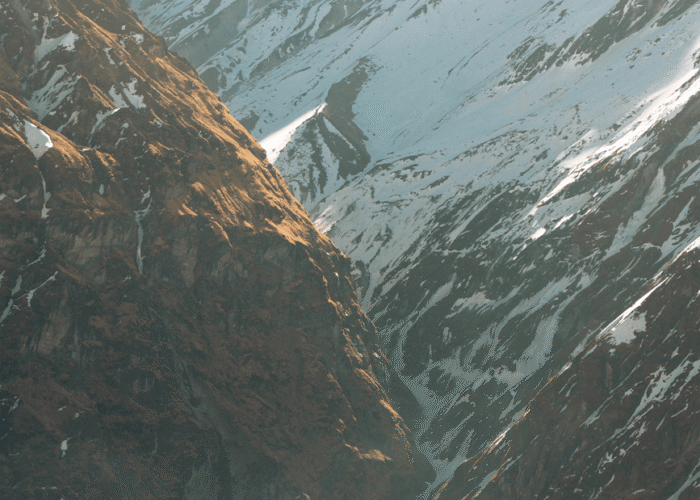
Trek to the heart of the Annapurna Sanctuary surrounded by majestic Annapurna Massif.

Trip Highlights
  • Maximum altitude: 4,130m / Annapurna Base Camp
  • Duration: 13 days / 12 nights
  • Difficulty: Moderate
  • Expert English-speaking certified guide
  • All meals during the trekking
  • All permits and TIMS card arranged
  • Airport transfers included
  • Mantra Adventure duffel bag provided

The Annapurna Base Camp Trek takes you into the heart of the Annapurna Himalaya — a natural amphitheatre of ice and rock at 4,130 metres, ringed by some of the highest peaks on earth. It is one of Nepal’s most complete trekking experiences, combining mountain villages, forest, high ridges, and a glacial sanctuary in a single 13-day route from Kathmandu. 

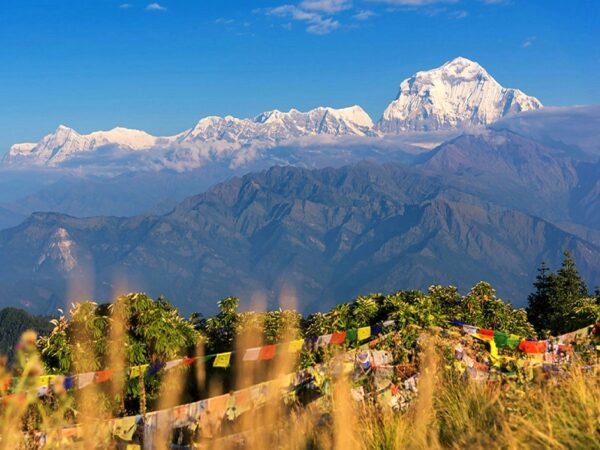
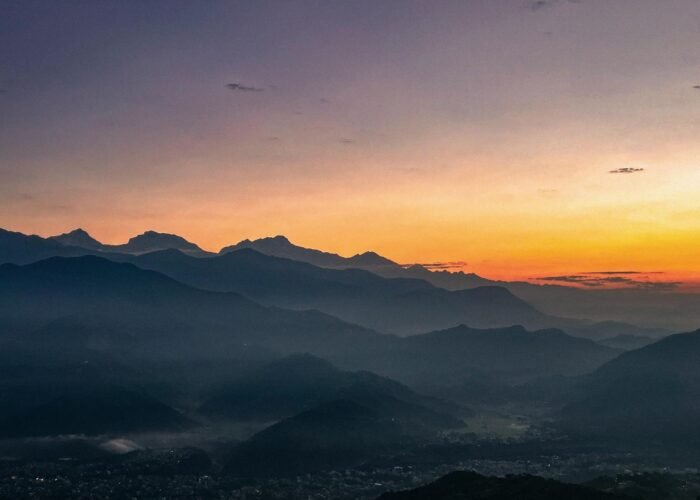
The trek starts gently. The first two days follow the Modi Khola river through terraced farmland and small Gurung villages. By Day 4, you are climbing 3,000 stone steps through rhododendron forest to Ghorepani. Day 5 starts before dawn — a 45-minute climb to Poon Hill for sunrise over the Annapurna range, Nilgiri and more where magnificent view of mt Dhaulagiri stands tall.

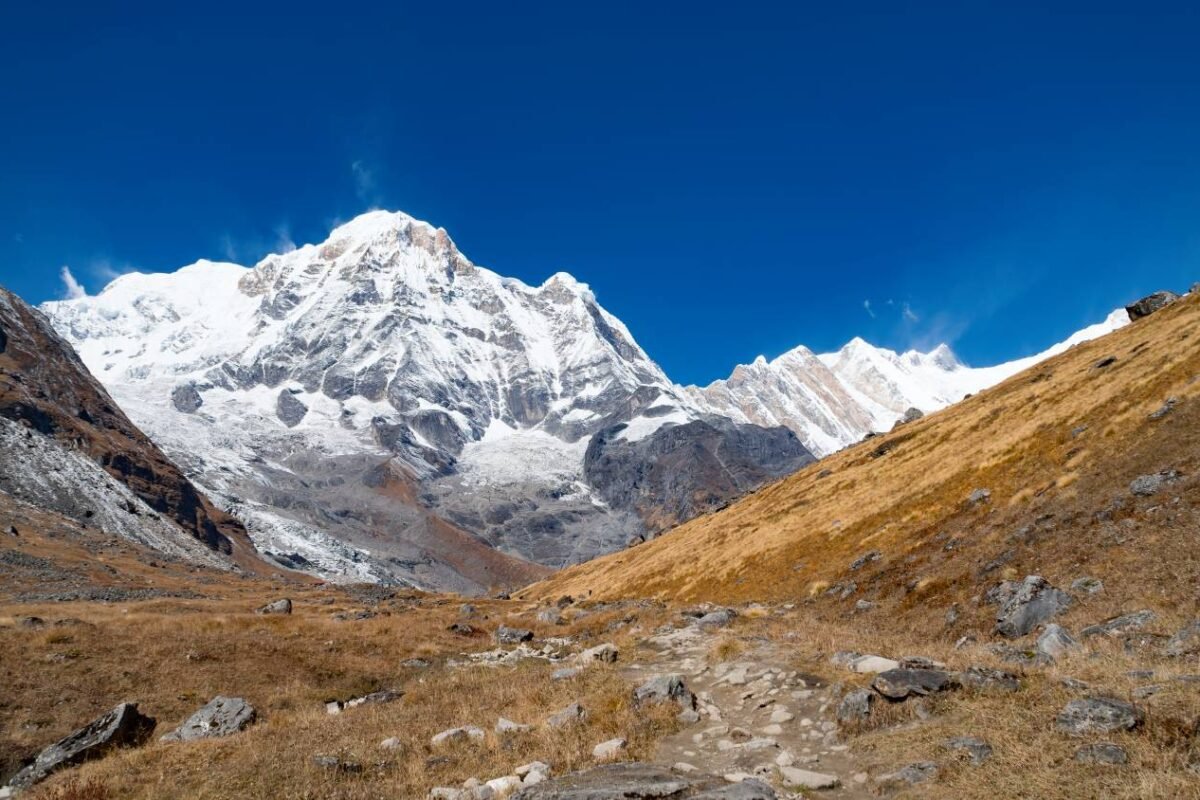
From there the trail continues to Tadapani and drops to Chhomrong, crosses into the bamboo gorge at Sinuwa, pushes through Dovan and Himalaya Hotel to Deurali, where the trees stop and the mountains take over completely. Two more hours past Machapuchare Base Camp and you are standing at Annapurna Base Camp — Annapurna I rising directly above you, the sanctuary walls closing in from every direction. 

The descent brings you back through the same gorge to the hot springs at Jhinu Danda, then a short walk to the road and a jeep back to Pokhara. 

What makes this trek different from EBC: the landscape changes completely every single day. You are not walking through one environment for two weeks. Subtropical valley, stone-step villages, ancient rhododendron forest, bamboo gorge, open snowfield — all of it in 13 days. 

Who can do it: Anyone with reasonable fitness and no health conditions that affect altitude. No technical climbing. No prior trekking experience required. A little tough day to reach Ghorepani from Tikhedhunga — a long steep climb. Everything else is manageable with a steady pace and a good guide. 

Best time: October–November for clear skies and sharp mountain views. March–April for the rhododendron bloom — the forest between Tikhedhunga and Ghorepani is one of the finest natural spectacles in Nepal during this period. 

Duration: 13 days from Kathmandu. Maximum altitude 4,130m. Difficulty: Moderate. Price from US$950 per person — includes guide, porter, all permits, all meals on trail, and accommodation throughout.

Why Choose the Annapurna Base Camp Trek?

The Annapurna Base Camp Trek is consistently ranked among Nepal’s top three treks alongside Everest Base Camp and the Annapurna Circuit — and it deserves to be. Here is what makes it genuinely exceptional:

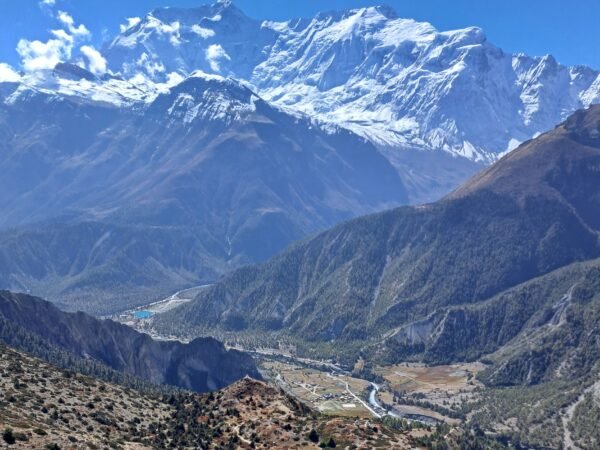
Unmatched scenic diversity. No other major Nepal trek passes through so many distinct landscapes in so few days. the approach combines subtropical forest, terraced farmland, bamboo groves, rhododendron forest, alpine meadows, and a high glacial cirque. On the Everest route, the lower sections are dramatic but relatively uniform. Here, every day brings a completely different visual world. 

The rhododendron forest. Nepal has over 30 species of rhododendron, and the largest concentration of mature rhododendron forest on earth lies on the slopes between Tikhedhunga and Ghorepani. From mid-March to late April, this forest blooms in waves of red, pink, white, and magenta — one of the most extraordinary natural spectacles in Asia. If you can time your trek for this window, do it. 

Cultural richness. The trail passes through traditional Gurung villages — Ghandruk, Chhomrong, Tadapani — where an ancient culture of mountain warriors and yak herders has remained relatively intact. The Gurung people are known for their hospitality and their role as Gurkha soldiers; the teahouses here are among the most welcoming on any Nepal trek. 

Poon Hill sunrise. The detour to Poon Hill (3,210m) on Day 5 adds one of the world’s most celebrated mountain viewpoints to an already outstanding route. The panorama across Dhaulagiri (8,167m), the Annapurna massif, and Machapuchare at sunrise is genuinely difficult to describe and impossible to forget. 

Moderate difficulty and accessible altitude. The maximum altitude of 4,130m at Annapurna Base Camp is significantly lower than EBC (5,364m), making altitude acclimatisation less demanding and the trek more accessible for those with limited high-altitude experience. Most healthy people with reasonable fitness can complete this route. 

Jhinu Danda hot springs. After nine days of trekking, the natural hot springs at Jhinu Danda on the Modi Khola river provide an extraordinary physical and psychological reward. Sitting in naturally heated pools with the Annapurna peaks above is a memory that lasts a lifetime.

Annapurna Base Camp Trekking Highlights 

  • Stand inside the Annapurna Sanctuary — a glacial cirque ringed by 13 peaks above 6,000m
  • Trek through the world’s largest rhododendron forest (spectacular March–April bloom)
  • Sunrise from Poon Hill (3,210m): Dhaulagiri, Annapurna I, Annapurna South, Nilgiri, Machapuchare all at once
  • Walk through Ghandruk — one of Nepal’s most beautiful traditional Gurung villages 
  • Reach Machapuchare Base Camp (3,700m) and Annapurna Base Camp (4,130m) 
  • 360-degree panorama of Annapurna I, II, III, Annapurna South, Hiunchuli, Gangapurna, and Machapuchare
  • Natural hot springs at Jhinu Danda after 9 days of trekking
  • Authentic Gurung and Magar cultural villages throughout

Fixed Departure Dates

All prices per person · Private departures available year-round
Departure Date Trip Status Availability Price / Person
14 Sep 2026
Returns 26 Sep 2026 · 13 days
Confirmed Available US $1,100 / person Book
27 Sep 2026
Returns 09 Oct 2026 · 13 days
Confirmed Available US $1,100 / person Book
14 Oct 2026
Returns 26 Oct 2026 · 13 days
Peak season
Filling Fast Limited Seats US $1,100 / person Book
27 Oct 2026
Returns 08 Nov 2026 · 13 days
Peak season
Filling Fast Limited Seats US $1,100 / person Book
14 Nov 2026
Returns 26 Nov 2026 · 13 days
Peak season
Filling Fast Limited Seats US $1,100 / person Book
27 Nov 2026
Returns 09 Dec 2026 · 13 days
Peak season
Filling Fast Limited Seats US $1,100 / person Book
14 Dec 2026
Returns 26 Dec 2026 · 13 days
Confirmed Available US $1,100 / person Book
27 Dec 2026
Returns 08 Jan 2027 · 13 days
Confirmed Available US $1,100 / person Book
14 Jan 2027
Returns 26 Jan 2027 · 13 days
Early bird available
Confirmed Available US $1,100 / person Book
27 Jan 2027
Returns 08 Feb 2027 · 13 days
Confirmed Available US $1,100 / person Book
14 Feb 2027
Returns 26 Feb 2027 · 13 days
Early bird available
Confirmed Available US $1,100 / person Book
27 Feb 2027
Returns 11 Mar 2027 · 13 days
Confirmed Available US $1,100 / person Book
14 Mar 2027
Returns 26 Mar 2027 · 13 days
Early bird available
Confirmed Available US $1,100 / person Book
27 Mar 2027
Returns 08 Apr 2027 · 13 days
Confirmed Available US $1,100 / person Book
14 Apr 2027
Returns 26 Apr 2027 · 13 days
Spring peak season
Filling Fast Limited Seats US $1,100 / person Book
27 Apr 2027
Returns 09 May 2027 · 13 days
Spring peak season
Filling Fast Limited Seats US $1,100 / person Book
14 May 2027
Returns 26 May 2027 · 13 days
Spring peak season
Filling Fast Limited Seats US $1,100 / person Book
27 May 2027
Returns 08 Jun 2027 · 13 days
Spring peak season
Filling Fast Limited Seats US $1,100 / person Book
14 Jun 2027
Returns 26 Jun 2027 · 13 days
Early bird available
Confirmed Available US $1,100 / person Book
27 Jun 2027
Returns 09 Jul 2027 · 13 days
Confirmed Available US $1,100 / person Book

💡 Need different dates? All trips run as private departures year-round.

Request Private Dates

Itinerary

Max altitude: 1,306m
Trekking: 20 minutes
Stay: Hotel with B&B plan

Welcome to Nepal — the gateway to the Himalayas. A Mantra Adventure representative meets you at Tribhuvan International Airport with our company signboard and transfers you to your hotel in Thamel, Kathmandu's vibrant tourist district. After checking in and freshening up from your international flight, take some time to adjust to Nepal's time zone and explore the extraordinary streets of Thamel — where shops selling trekking gear, Tibetan thangka paintings, pashmina shawls, and singing bowls line every alleyway alongside cafés and restaurants serving everything from Nepali dal bhat to Italian pasta.

In the evening, your trekking guide joins you at the hotel for a comprehensive pre-trek briefing. We review the 13-day Annapurna Base Camp itinerary in detail, discuss altitude awareness and the symptoms of altitude sickness, go over your packing list, and answer any questions about the route, the culture, or what to expect in the teahouses. This is also the moment to check your gear — if you need any last-minute equipment such as trekking poles, a down jacket, a sleeping bag liner, or thermal base layers, the shops of Thamel are open late and well-stocked with both genuine and replica brands. Your guide will point you to the most reliable options.

Enjoy a welcome dinner featuring authentic Nepali cuisine — dal bhat (rice and lentil soup), gundruk (fermented greens), momos (dumplings), and sel roti (fried rice bread) — and rest early. Tomorrow begins the journey to Pokhara.

Max altitude: 822m
Trekking: 6-7 hours
Stay: Hotel with B&B plan

After breakfast, we depart for Pokhara — Nepal's adventure capital, second-largest city, and the gateway to the entire Annapurna region. Two transport options are available: a comfortable tourist bus along the Prithvi Highway (6–7 hours, passing through the Trishuli River gorge and the lower Marsyangdi valley), or a 25-minute domestic flight from Kathmandu's domestic terminal with extraordinary aerial views of the Annapurna, Manaslu, and Ganesh Himal ranges. We recommend the flight if your budget allows — the bird's-eye view of Dhaulagiri and the Annapurna massif from the aircraft window on a clear morning is extraordinary.

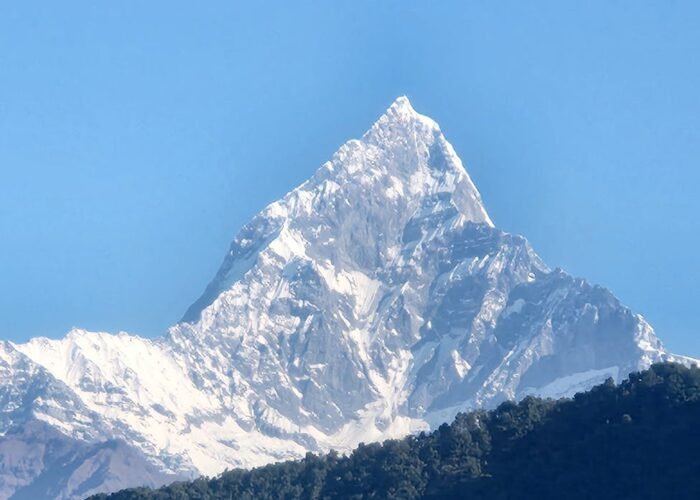
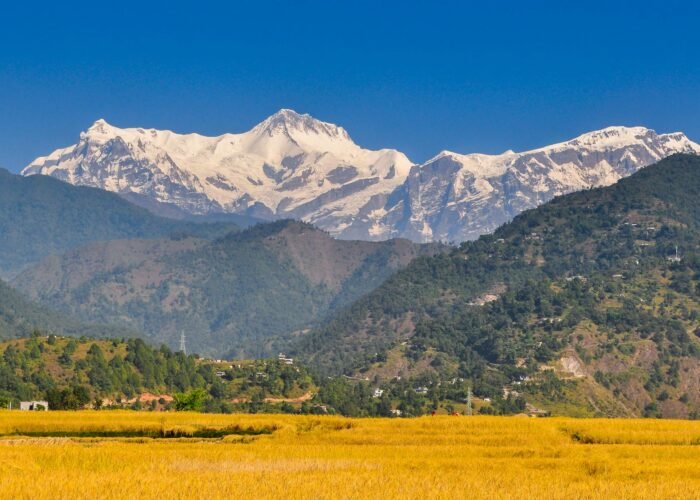
Pokhara sits at 822 metres beside Phewa Lake, Nepal's second-largest lake. In the early morning and evening, the sacred peak of Machapuchare (6,993m) — the Fishtail Mountain, so named for its distinctive double-summit — reflects perfectly in the mirror surface of the lake. On clear days, Dhaulagiri (8,167m) is visible to the west and Annapurna South and Annapurna I to the north. The mountain panorama from Pokhara's lakeside is one of the finest in Nepal and a superb visual introduction to the trekking region ahead.

The afternoon in Pokhara is free. Options include a boat trip on Phewa Lake to the Barahi Island Temple, a short hike to the World Peace Pagoda (Shanti Stupa) for a panoramic city and mountain view, or simply sitting at a lakeside café watching the mountains while enjoying a coffee. In the evening, Pokhara's lakeside district offers excellent restaurants serving fresh trout (farmed locally on Phewa Lake), wood-fired pizza, and high-quality Nepali cuisine at a fraction of Kathmandu prices.

Max altitude: 1,480m
Trekking: 4-5 hours
Stay: Teahouse with LBD plan

An early morning jeep transfer from Pokhara drives 42 kilometres west along a winding mountain road through Birethanti and the Modi Khola valley to Nayapul — the traditional starting point for the Annapurna Base Camp Trek. The drive takes approximately 90 minutes and passes through several market towns with roadside stalls selling fresh produce, incense, and Buddhist prayer items.

At Nayapul, we cross the suspension bridge over the Modi Khola river and officially enter the Annapurna Conservation Area — one of Nepal's most important protected zones, covering 7,629 square kilometres and home to snow leopards, red pandas, and over 1,200 plant species. The ACAP permit and TIMS card are checked at the Birethanti checkpoint before the trail begins proper.

Today's walk is deliberately short — an introduction to Himalayan trekking that allows your legs and lungs to adjust without overexertion. The trail follows the Modi Khola upstream through subtropical forest and terraced farmland, passing through the small villages of Hile and Sudami. The sounds of the river and the calls of unfamiliar birds — spotted doves, Himalayan bulbuls, and Indian rollers — accompany the walk. Stone-paved pathways lead through traditional stone-and-mud houses where women weave on handlooms outside their doorways.

Tikhedhunga (1,480m) is a small village perched above the river where the famous stone staircase begins its climb toward Ulleri. Settle into your teahouse, enjoy a hot shower if available, and eat a good dinner — tomorrow involves one of the trek's steepest climbs.

Max altitude: 2,860m
Trekking: 5-6 hours
Stay: Teahouse with BLD plan

oday delivers the most dramatic single-day altitude gain of the entire Annapurna Base Camp Trek — a lung-testing 1,380 metres of ascent from Tikhedhunga to Ghorepani. It is a long, hard day, and also one of the most beautiful.

From Tikhedhunga, the trail immediately begins its famous climb on a stone staircase of nearly 3,000 individual steps — hand-carved from local rock by village communities over generations. The steps are relentless in the first hour, climbing steeply through subtropical scrub before the first significant reward: the large Magar village of Ulleri (2,073m), strung along a ridge with spectacular views back down the Modi Khola valley to the distant plains. Ulleri's teahouses offer welcome cold drinks and rest before the climb continues.

Above Ulleri, the trail enters the rhododendron forest — and this is where the Annapurna Base Camp Trek reveals something extraordinary. These are not the scraggly ornamental rhododendrons of western gardens. These are ancient, gnarled trees twenty metres tall, their trunks clothed in moss and lichen, their branches intertwining overhead to form a cathedral-like canopy. From mid-March through late April, the same trees are entirely covered in blooms — the largest concentration of rhododendron in the world, in perhaps ten distinct species, cycling through red, crimson, white, and pink as the season progresses from lower to higher altitudes.

Even outside the bloom season, the forest is spectacular — the filtered light through the moss-covered branches, the sound of streams rushing below, the occasional glimpse of Dhaulagiri and the Annapurna range through clearings in the canopy. The trail passes through the small rest stops of Banthanti and Nangethanti before the forest opens onto the broad ridgeline settlement of Ghorepani at 2,860 metres.

Ghorepani is a substantial village of well-run teahouses, bakeries, and shops selling Annapurna merchandise and basic trekking supplies. Set your alarm now for tomorrow's 4:30 AM departure to Poon Hill — the pre-dawn climb is non-negotiable if you want the clearest views.

Max altitude: 2,630m
Trekking: 5-6 hours
Stay: Teahouse with BLD plan

The 4:30 AM alarm sounds in darkness and cold. Headtorches on, warm layers over everything, and the climb to Poon Hill begins. The stone steps from Ghorepani to the viewpoint take 40–50 minutes at a steady pace, the trail winding through the rhododendron forest in pre-dawn silence broken only by the crunch of boots on frost-covered stone and the distant bark of a dog from the village below.

Poon Hill's viewpoint platform at 3,210 metres is already busy with trekkers and local guides by the time you arrive — October and April mornings draw dozens of visitors to this hilltop, all facing east in anticipation. As the sky lightens from black to deep blue to the first orange blush of dawn, the mountains begin to reveal themselves from the darkness. Dhaulagiri (8,167m) appears first to the west, its summit pyramid catching the earliest light. Then the Annapurna range materialises progressively: Annapurna I (8,091m), Annapurna South (7,219m), Hiunchuli (6,441m), Nilgiri (7,061m), and finally, dead ahead to the north, the extraordinary double-summit of Machapuchare (6,993m) — the Fishtail Peak, whose ascent is permanently forbidden by the Nepal government out of respect for its sacred status as the abode of the god Shiva.

As the first direct rays of sunrise strike the summit snows and turn them gold, then orange, then blindingly white, Poon Hill delivers one of the finest mountain viewpoints accessible to non-climbers anywhere on earth. Photograph it. Stand in silence and absorb it. This moment is why the Annapurna Base Camp Trek exists.

After descent and a celebratory breakfast back in Ghorepani, the day continues with a trail east through continuing rhododendron forest to Deurali, then upward to Tadapani — a ridgetop settlement at 2,630 metres with commanding views of Annapurna South ahead and the forested hills of the Modi Khola valley below. Tadapani's teahouses are good and the evening light on the mountains is worth sitting outside for.

Max altitude: 2,340m
Trekking: 6-7 hours
Stay: Teahouse with BLD plan

A beautiful trekking day that takes you from Tadapani's forested ridge down into the upper Modi Khola valley and across to the bamboo-fringed slopes above Chhomrong. The trail descends steeply from Tadapani through old-growth rhododendron and oak forest — spectacular in the March–April bloom season — to the small settlement of Gurjung (2,100m), perched on a ridge with open views across the valley. From Gurjung, the path drops further to the Chhomrong Khola river crossing before the trail climbs the opposite bank on stone stairs to the famous Gurung village of Chhomrong (2,170m).

Chhomrong is one of the most beautiful and prosperous villages on the entire Annapurna trek — a tiered settlement of stone houses, carefully tended gardens, and excellent teahouses, with Annapurna South (7,219m) filling the northern sky and Machapuchare visible to the northeast. The views from Chhomrong's upper teahouses are among the finest at this altitude in Nepal. This is also the last significant supply point before the Sanctuary — stock up on snacks and any personal supplies here, as prices increase steadily above this point.

From Chhomrong, the trail descends stone steps to the Chhomrong Khola crossing and then climbs the opposite bank into the dense bamboo forest that signals the start of the Sanctuary approach. Sinuwa (2,340m) is a small cluster of teahouses nestled in the bamboo — cool, atmospheric, and quiet. The bamboo here forms a green tunnel over the trail, light filtering through the dense canopy in a way that feels entirely different from the rhododendron forest below.

Max altitude: 3,230m
Trekking: 5-6 hours
Stay: Teahouse with BLD plan

A long, steadily climbing day that takes you deep into the Annapurna Sanctuary approach through some of the most dramatic gorge terrain in Nepal. The trail leaves Sinuwa's bamboo forest and climbs through increasingly wild terrain, passing through the small settlements of Bamboo (2,310m) — where the bamboo forest is at its densest and most atmospheric — and Dovan (2,600m), where the Modi Khola gorge narrows to a dramatic canyon of vertical walls and roaring white water with waterfalls cascading hundreds of metres from the ridges above.

Above Dovan, the trail continues through Himalaya Hotel (2,900m) — a cluster of teahouses at a dramatic natural amphitheatre where the gorge walls close in completely — and pushes on upward through the forest fringe zone where the trees gradually thin and the first high peaks begin to appear at the upper reaches of the gorge. The trail crosses several glacial streams on stepping stones. The air is noticeably thinner and colder above 2,800m.

Several avalanche-prone slopes cross the trail between Himalaya Hotel and Deurali — your guide monitors conditions carefully and chooses appropriate crossing times based on temperature and recent snowfall. Movement through these zones is purposeful and direct. Deurali (3,230m) sits at the critical gateway where the gorge opens and the Sanctuary reveals itself for the first time — the high peaks suddenly visible in scale above the narrowing valley ahead.

Max altitude: 4,130m
Trekking: 4-5 hours
Stay: Teahouse with BLD plan

The defining day of the Annapurna Base Camp Trek. From Deurali, the treeline ends completely and the landscape transforms into a vast glacial world. The trail crosses open snowfields and glacial moraine, with the peaks closing in progressively from every direction as you advance up the valley.

The first major milestone is Machapuchare Base Camp (MBC) at 3,700m — a small collection of teahouses at the foot of the sacred Fishtail Peak's unclimbed south face. Machapuchare (6,993m) towers directly overhead at genuinely close range here — its extraordinary double summit visible in dramatic detail, sheer walls of ice and rock rising from the glacier snout below to the summit ridge above. The Nepal government has permanently prohibited any ascent of Machapuchare out of respect for its sacred status as the throne of Lord Shiva. Take a rest stop and tea at MBC.

From MBC, the final 430 metres of ascent to Annapurna Base Camp at 4,130m is one of the most extraordinary approach walks in all of Himalayan trekking. The valley narrows to a glacial corridor and the mountains close in from all sides simultaneously — Annapurna I (8,091m), Annapurna South (7,219m), Gangapurna (7,455m), Annapurna III (7,555m), Hiunchuli (6,441m), Annapurna IV (7,525m), and Machapuchare (6,993m) form an unbroken circle of ice, rock, and sky around you at 4,130 metres. You are inside the mountains.

The base camp holds a small collection of teahouses and a memorial for climbers lost on Annapurna — the mountain with the highest fatality-to-summit ratio of any 8,000-metre peak. If you arrive in late afternoon, watch for the alpenglow — the mountains turning through orange, red, and deep purple as the sun drops behind the western ridges. Wrap up warm: temperatures at 4,130m fall sharply after sunset and the wind inside the cirque can be biting.

Max altitude: 2,310m
Trekking: 6-7 hours
Stay: Teahouse with BLD plan

Set your alarm early for the ABC sunrise — one of the most extraordinary natural spectacles accessible to trekkers anywhere in the Himalaya. The Sanctuary at pre-dawn is silenced by cold and absolute darkness. As the sky lightens from black to deep indigo to the first pale gold, the peaks reveal themselves progressively — Annapurna I's south face blazing in the first direct light, the glacier below cracking and groaning as temperature changes stress the ice. Stand quietly. Absorb where you are and what surrounds you. Most trekkers describe this morning as the most powerful single moment of their trek.

After a celebratory breakfast, we begin the long descent. The return route retraces the ascent — through MBC, across the open glacier approach, through the avalanche zones above Deurali, and down through Himalaya Hotel. The perspective on descent is entirely different from the ascent — the mountains now behind you, the valley opening ahead, the details of the gorge walls and waterfalls more apparent at leisure.

We descend all the way to Bamboo (2,310m) today — a long but rewarding downhill that drops nearly 2,000 metres from the base camp. Most trekkers notice the air thickening noticeably as they drop through the 3,000m mark, energy returning and breathing becoming effortless by comparison with the high camp. Lunch at Himalaya Hotel or Dovan depending on pace.

Max altitude: 1,780m
Trekking: 4-5 hours
Stay: Teahouse with BLD plan

A welcome shorter day descending from Bamboo through familiar terrain. The trail drops through the bamboo forest, re-crosses the Chhomrong Khola at the valley floor, and climbs back up the stone steps to Chhomrong (2,170m) — the great up-down character of the Sanctuary approach felt in reverse on the way out. The Chhomrong stone-step climb is gentler in the descending direction but the thighs still notice it after nine consecutive trekking days.

Lunch at Chhomrong's excellent teahouses — renowned for their apple pie, yak cheese omelettes, and freshly baked bread. Then the trail descends from Chhomrong by a different, quieter route to Jhinu Danda (1,780m), a small riverside settlement with a single extraordinary attraction: the natural hot springs on the bank of the Modi Khola river.

The Jhinu Danda hot springs are geothermally heated pools maintained by the local community at approximately 40–45°C — hot enough to thoroughly unknot every muscle that ten days of Himalayan trekking have tightened. The pools sit beside the roaring Modi Khola gorge with forest slopes rising on both sides and, on clear days, the distant outline of Machapuchare visible above the ridgeline to the north. Spend at least an hour in the springs. This evening is for celebration — you have completed the Annapurna Base Camp Trek.

Max altitude: 822m
Trekking: 3 hours
Stay: Hotel with B&B plan

The final morning of the Annapurna Base Camp Trek. A short, pleasant descent from Jhinu Danda through terraced farmland and small Magar villages along the Modi Khola river brings you to Nayapul (1,070m) in approximately two hours. The lower valley walk is relaxed and easy — a chance for conversation, reflection, and photography of the subtropical farmland landscape that feels worlds away from the glacial cirque you stood in three days ago.

At Birethanti, the ACAP permit checkpoint records your exit from the Annapurna Conservation Area. A private vehicle meets you at Nayapul for the 90-minute drive back to Pokhara along the scenic Siddhartha Highway — arriving in Pokhara by midday.

The Pokhara hotel hot shower — unlimited pressure, unlimited hot water, the ability to wash your hair without a bucket — is one of the great uncomplicated pleasures of returning from any Nepal trek. The afternoon is free: Phewa Lake at lunchtime, a lakeside restaurant for fresh trout, a boat on the lake watching Machapuchare reflect in the water, the Gurkha Museum, Devi's Fall — or simply sitting on a café terrace watching the mountains you've just walked through from the valley below.

Celebratory dinner in Pokhara this evening with your guide. Tips for the guide and porter are traditionally presented at this meal — the guide USD 15–20 per trekking day, the porter USD 8–10 per day.

Max altitude: 1,324m
Trekking: 6-7 hours
Stay: Hotel with B&B plan

Return to Kathmandu by tourist bus or domestic flight. Arriving by midday or early afternoon, the rest of the day is free for last-minute shopping, a Kathmandu valley sightseeing tour (Boudhanath Stupa, Pashupatinath Temple, Swayambhunath — the Monkey Temple), or simply relaxing in a Thamel café.

The shops of Thamel offer excellent souvenirs: locally made pashmina shawls and scarves (Nepal is the world's finest pashmina producer), Tibetan singing bowls, handmade Lokta paper notebooks, thangka paintings, and ceramic yak figurines.

Your guide coordinates your airport transfer for the following morning and provides final travel information.

Stay: Breakfast

Your Annapurna Base Camp Trek with Mantra Adventure concludes today. Our representative meets you at the hotel lobby approximately three hours before your international flight and transfers you safely to Tribhuvan International Airport. As you leave Nepal, you carry home not just memories and photographs, but a genuine physical achievement and a deeper connection to the Himalayan world — its mountain scale, its Buddhist culture, and the extraordinary warmth of the Nepali people who make their lives in its valleys and ridges.

Many Mantra Adventure guests return. The Everest Base Camp Trek, the Annapurna Circuit, the Manaslu Circuit, Island Peak climbing — there are many more chapters in a Himalayan trekking life. We hope to welcome you back for the next one.

Want to customize this?

Every itinerary is fully flexible.

Customize This Trip

Trip Route

6 stops · Nayapul → Deurali · Max elevation: 3,230 m

Elevation Profile
Nayapul — 1,070m 1,070m Tikhedunga — 1,480m Ghorepani — 2,860m Tadapani — 2,630m Sinuwa — 2,340m Deurali — 3,230m 3,230m Nayapul Tikhedunga Ghorepani Tadapani Sinuwa Deurali
1
Nayapul
1,070 m · Day 1
Trek start
2
Tikhedunga
1,480 m · Day 2
Gurung village
3
Ghorepani
2,860 m · Day 3
Gateway to sanctuary
4
Tadapani
2,630 m · Day 5
Modi Khola valley
5
Sinuwa
2,340 m · Day 6
Fishtail views
6
Deurali
3,230 m · Day 7

Group Discount Pricing

Travel together, save together. The more people in your group, the lower the price per person.

Group Size Price / Person Savings
1 Pax
US $999 / person
4 - 7 Pax
US $900 / person
Save $99 10% off
8 - 13 Pax
US $850 / person
Save $149 15% off
14+ Pax
US $850 / person
Save $149 15% off

Included

  • Airport pick-up and drop-off
  • Domestic transport per itinerary
  • All accommodation during the trip
  • All meals as specified in the itinerary
  • Experienced English-speaking certified guide
  • Porter (1 per 2 trekkers, max 15kg)
  • All trekking permits and national park fees
  • TIMS card
  • Mantra Adventure duffel bag
  • First aid kit

Not Included

  • International flights
  • Nepal visa (USD 30-100 on arrival)
  • Personal travel insurance (mandatory)
  • Meals in Kathmandu/Pokhara
  • Accommodation in Kathmandu (available on request)
  • Alcoholic beverages, hot showers, personal items
  • Personal trekking gear
  • Tips for guide and porters

Essential Tips

October and November (Autumn - Best for views) — Post-monsoon Nepal is at its clearest and most dramatic. The air is washed clean by the monsoon, the skies are deep blue, and the mountain panoramas from Poon Hill and Annapurna Base Camp are at their sharpest. October is the busiest month — trails and popular teahouses fill up. November is equally good with fewer trekkers and progressively cooler temperatures. Both months are outstanding. March and April (Spring - Best for rhododendrons) —The rhododendron bloom that makes the Ghorepani approach so spectacular peaks in March and April. For the specific experience of trekking through flowering forest — the most beautiful version of this particular trail — these are the finest months.

This trip is rated Moderate. Suitable for beginners with basic fitness — walking 3-4 times per week for 4-6 weeks is adequate. No technical experience needed.

Most nationalities get Nepal visa on arrival at Kathmandu airport for USD 30 (30 days). Indian nationals do not require a visa.

Annapurna Conservation Area Permit (USD 30) + TIMS card. Arranged by Mantra Adventure. No extra hassle for you.

Included: Airport transfers; domestic flights/transport per itinerary; all trek accommodation; all meals during trek; English-speaking guide; porters (1 per 2 trekkers); all trekking permits; Mantra Adventure duffel bag. Not included: International flights; Nepal visa; personal travel insurance (mandatory); personal gear; tips.

For Annapurna Base Camp Trek (Moderate): Regular walking or swimming 3×/week for 6 weeks is sufficient. You should be comfortable walking 5-6 hours on uneven terrain.

Maximum altitude is 4,130m / Annapurna Base Camp. Altitude sickness is a real risk above 3,500m. Our itinerary includes acclimatisation days and our guides carry supplemental oxygen. Diamox can be taken as prophylaxis — consult your doctor. Emergency evacuation insurance is mandatory.

Gear & Packing List

Everything you need for this trek — organised by category. Mantra Adventure provides the duffel bag and porter. You carry a daypack with daily essentials.

Duffel bag (70L)
Provided by Mantra Adventure — carried by porter
Daypack (25–30L)
You carry this on trail daily
Sleeping bag (-10°C to -15°C)
Required above Chhomrong
Trekking poles
Strongly recommended for stone steps and steep descents
Headtorch + spare batteries
Essential for Poon Hill pre-dawn climb and power cuts
Water bottles (2L total capacity)
Reusable — no plastic bottles above Chhomrong
Water purification tablets or SteriPen
Treat tap water above Chhomrong
Power bank (10,000–20,000 mAh)
Charging is limited above Himalaya Hotel
Moisture-wicking base layers (2 tops, 1 thermal bottom)
Merino or synthetic — no cotton
Fleece mid-layer jacket
Core warmth for mornings above 2,500m
Down jacket (-10°C rated)
Essential for evenings at Ghorepani, Deurali, and ABC
Waterproof shell jacket
Gore-Tex or equivalent
Trekking trousers (2 pairs)
Quick-drying
Rain trousers
Zip-off style recommended
Trekking shirts (3–4)
Long-sleeve for sun protection
Swimsuit
For Jhinu Danda natural hot springs
Waterproof trekking boots
Ankle support essential — break in before departure
Camp sandals or light shoes
Teahouse evenings and Jhinu hot springs
Wool trekking socks (4–5 pairs)
Smartwool or Darn Tough recommended
Warm hat and gloves
Essential for Poon Hill pre-dawn — cold even in April
UV-rated sunglasses
Glacier glasses for ABC — UV intensity high above 3,500m
Buff / neck gaiter
Dust, sun protection, and cold air
Sunscreen SPF 50+
UV is intense above 3,000m — reapply every 2 hours
Lip balm SPF 50+
Wind and cold damage lips quickly above treeline
Hand sanitiser + wet wipes
Essential above Himalaya Hotel where water is scarce
Personal first aid kit
Blister pads, ibuprofen, paracetamol, Imodium, antihistamine
Electrolyte tablets / ORS
Hydration and muscle recovery after steep climb days
Personal medications
Your guide carries the group first aid kit and oximeter
Camera + extra memory cards
Poon Hill sunrise and ABC are peak photography moments
Earplugs
Thin teahouse walls — essential for sleep
Small thermos (500ml)
Hot tea from Himalaya Hotel to ABC — worth carrying
Energy bars / trail snacks (5–6)
For early starts and long days
Dry bags / large zip-locks
Protect electronics from rain and river crossings
Local Nepal Telecom SIM
Best network coverage in Annapurna region

Porter limit: Each porter carries max 15kg. Pack your duffel to under 12kg and carry daily essentials in your own daypack. Gear hire (sleeping bags, jackets, poles) is available in Pokhara.
Related Trips

Everest Base Camp Helicopter Tour Helicopter Tour Next: 17 Sep
Helicopter Tour
5 hrs Nepal Easy

Everest Base Camp Helicopter Tour

Khopra Hill Trek Off-Beat Trek Next: 21 Sep
Off-Beat Trek
10 Days / 9 Nights Nepal Moderate

Khopra Hill Trek

Kanchenjunga Trek Restricted Area Trek Next: 13 Sep
Restricted Area Trek
24 Days / 23 Nights Nepal Strenuous

Kanchenjunga Trek