
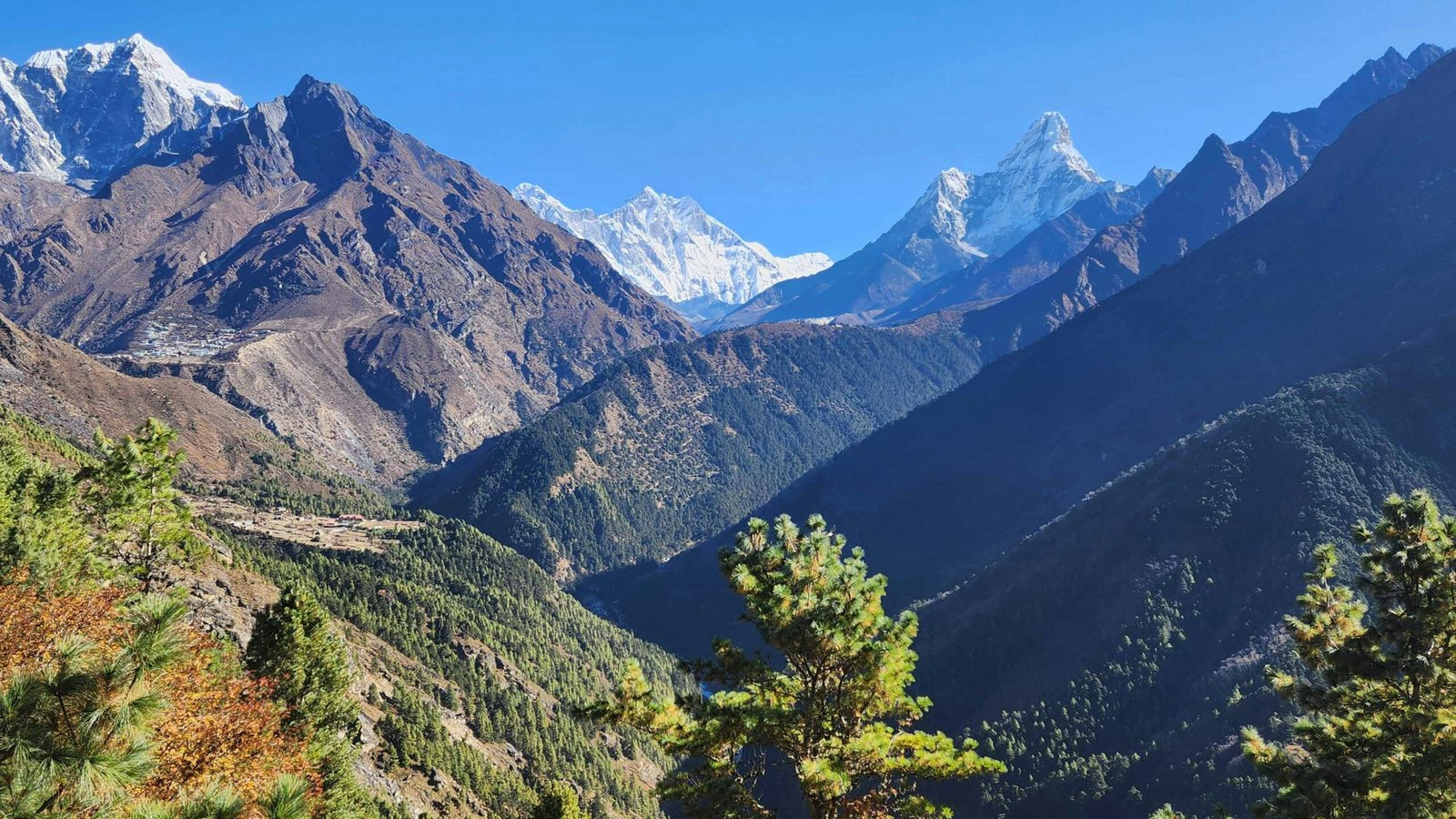
Standing at 5,364 metres above sea level, Everest Base Camp Trek is one of the most iconic destinations on earth. Every year, thousands of trekkers from more than 60 countries lace up their boots and head into the Khumbu region to stand at the foot of the world’s highest mountain. If you are planning your own EBC adventure, this guide covers everything — from the day-by-day route and permit requirements to what to pack, how much it costs, and how to stay safe at altitude.
Why Trek to Everest Base Camp?
The Everest Base Camp trek is not simply a walk to the bottom of a famous mountain. It is a journey through one of the most dramatic landscapes on the planet — deep river gorges, silver suspension bridges, yak pastures, ancient Buddhist monasteries, and ridge-top teahouses with unobstructed views of Lhotse, Nuptse, Ama Dablam, and of course, Everest itself.
Beyond the scenery, the trek takes you through the heart of Sherpa culture. Villages like Namche Bazaar, Tengboche, and Dingboche have preserved traditions that stretch back centuries. Watching butter lamps flicker inside a centuries-old gompa, sharing a pot of butter tea with a lodge owner, or witnessing a puja ceremony at Base Camp before a climbing expedition — these are the experiences that stay with trekkers long after they return home.
Everest Base Camp Trek: Key Facts at a Glance
| Detail | Information |
|---|---|
| Maximum Altitude | 5,364 m (Everest Base Camp) / 5,545 m (Kala Patthar) |
| Total Distance | Approx. 130 km (round trip) |
| Duration | 12–16 days (recommended) |
| Difficulty | Moderate to Challenging |
| Best Season | March–May & September–November |
| Starting Point | Lukla (fly from Kathmandu) |
| Required Permits | Sagarmatha National Park Permit + TIMS Card |
| Daily Walking Hours | 5–7 hours average |
The Classic EBC Trek Route, Day by Day
Day 1: Fly Kathmandu to Lukla — Trek to Phakding (2,610 m)
Your adventure begins with a 35-minute mountain flight from Kathmandu’s domestic terminal to Tenzing-Hillary Airport in Lukla — widely listed among the world’s most dramatic landing strips. After meeting your guide and organising your gear, you descend alongside the Dudh Koshi River to the village of Phakding. The trail passes through pine and rhododendron forest and crosses your first suspension bridges. Walking time: approximately 3–4 hours.
Day 2: Phakding to Namche Bazaar (3,440 m)
Today’s walk is the first real test of the trek. The trail climbs steadily through the Sagarmatha National Park entrance, crosses the famous Hillary Suspension Bridge (116 m above the Dudh Koshi), and grinds up a long, steep ascent into Namche Bazaar. Your first view of Everest from the Hillary Viewpoint near the park gate is a reward worth every step. Walking time: 5–6 hours.
Day 3: Acclimatisation Day in Namche Bazaar
Do not skip this day. Acclimatisation is the single most important factor in a successful Everest Base Camp Trek. Namche is the perfect place to rest — it has bakeries, coffee shops, gear shops, a museum, a Saturday market, and panoramic views. The recommended acclimatisation hike goes up to the Everest View Hotel (3,880 m) and Khumjung village, giving you your first close look at the Khumbu peaks without gaining too much altitude overnight.
Day 4: Namche to Tengboche (3,860 m)
The trail contours around the hillside above the Dudh Koshi Valley before dropping to the confluence at Phunki Tenga and climbing sharply to Tengboche. The Tengboche Monastery — the most important gompa in the Khumbu — sits on a ridge with a view that defies belief: Everest, Lhotse, Nuptse, Ama Dablam, and Thamserku all visible at once. Arrive in time for the 3pm monastery prayers. Walking time: 5–6 hours.
Day 5: Tengboche to Dingboche (4,410 m)
Descend through birch and rhododendron forests to Pangboche — home to the oldest monastery in the Khumbu — then continue up the increasingly barren Imja Valley to Dingboche. You are now well above the tree line. The village sits in a wide glacial valley surrounded by stone-walled fields used to grow barley and potatoes during summer. Walking time: 5–6 hours.
Day 6: Acclimatisation Day in Dingboche
A second acclimatisation hike is essential at this altitude. The popular option is to climb the ridge above Dingboche to around 5,100 m — you will be rewarded with close-up views of Lhotse’s South Face and Island Peak (Imja Tse). This hike also prepares your body for the altitude gains ahead.
Day 7: Dingboche to Lobuche (4,940 m)
The trail follows the lateral moraine of the Khumbu Glacier to the Thukla Pass (4,830 m), where a cluster of cairns and prayer flags marks a memorial to climbers who have died on Everest and neighbouring peaks. The atmosphere is deeply moving. Continue to Lobuche, a collection of lodges perched on the edge of the glacier. Walking time: 5–6 hours.
Day 8: Lobuche to Gorak Shep (5,164 m) — Visit Everest Base Camp (5,364 m)
The trail from Lobuche crosses the rocky glacier moraine to Gorak Shep — the last settlement before Base Camp. After dropping your pack and taking lunch, you continue to Everest Base Camp itself. The Base Camp “season” runs from late March to May; during this period the camp is alive with expedition tents, ladders, and the roar of the icefall. Outside season you will find the moraine quieter, but the view of the Khumbu Icefall remains extraordinary. Return to Gorak Shep for the night. Walking time: 7–9 hours (including BC visit).
Day 9: Gorak Shep to Kala Patthar (5,545 m) — Descend to Pheriche (4,240 m)
Most trekkers rise before dawn for the climb to Kala Patthar — the best viewpoint on the entire trek. As the sun rises above Nuptse, it catches the summit pyramid of Everest in shades of gold and pink. The photograph you take here will be on your wall for the rest of your life. Descend through Lobuche and Dzonghla all the way to Pheriche. Walking time: 7–9 hours.
Days 10–12: Descent via Pangboche, Namche, and Back to Lukla
The return journey largely reverses the upward route. Knees take the brunt of the descent, so trekking poles are invaluable. Overnight stops at Tengboche (or Pangboche), Namche, and then Lukla.
Day 13: Fly Lukla to Kathmandu
Weather permitting, the morning flight whisks you back to Kathmandu — where a hot shower, a cold beer, and a plate of dal bhat await.
Permits Required for the Everest Base Camp Trek
You need two official documents before entering the Khumbu:
1. Sagarmatha National Park Entry Permit
Cost: NPR 3,000 (approx. USD 22) per person. Obtained at the park entrance in Monjo or in advance at the National Park office in Kathmandu.
2. TIMS Card (Trekkers’ Information Management System)
Cost: NPR 2,000 (approx. USD 15) per person. Obtained through a registered trekking agency or the Nepal Tourism Board in Kathmandu.
How Much Does the Everest Base Camp Trek Cost?
The total cost depends on whether you book through an agency (recommended) or trek independently. Below is a realistic budget breakdown for a guided, teahouse trek:
| Item | Estimated Cost (USD) |
|---|---|
| Kathmandu–Lukla–Kathmandu flights | $200–$350 return |
| Agency fee (guide, permits, logistics) | $800–$1,500 |
| Teahouse accommodation (per night) | $5–$20 |
| Meals on the trail (per day) | $20–$35 |
| Personal gear (if purchasing) | $200–$500 |
| Travel insurance (mandatory) | $80–$200 |
| Total Estimate | $1,500–$3,000+ |
Luxury lodge options (Yeti Mountain Home, Everest Summit Lodges) add $150–$300 per night but transform the comfort level significantly.
Best Time for the Everest Base Camp Trek
Spring (March–May) — Peak Season
This is the most popular window. Skies are clearer than in summer, temperatures are rising, and rhododendrons are in bloom below 4,000 m. April and early May coincide with the main Everest climbing season, so Base Camp is at its most atmospheric.
Autumn (September–November) — Peak Season
October is widely considered the single best month to trek in Nepal. Post-monsoon skies are crystal clear, temperatures are stable, and visibility is at its finest. Trails are busy but teahouses are well-stocked and well-staffed.
Winter (December–February) — Off Season
Cold (temperatures at Gorak Shep drop to −20°C at night), but uncrowded and starkly beautiful. The trails below Namche remain comfortable. Higher sections require good cold-weather gear.
Monsoon (June–August) — Not Recommended
Heavy rain, leeches below 3,000 m, cloud-covered views, and landslide risk on approach roads. Most experienced trekkers avoid this window for EBC.
Fitness and Training for Everest Base Camp Trek
You do not need to be an athlete to complete the Everest Base Camp trek, but you do need a solid aerobic base. Six to eight weeks of consistent preparation before departure makes a significant difference.
Recommended training:
– Running or hiking 3–4 times per week, building to 10–15 km sessions
– Stair climbing with a loaded pack (12–15 kg) to simulate trail conditions
– Day hikes on uneven terrain to condition ankles and knees
– Yoga or stretching to prevent injury
The biggest challenge on EBC is not fitness — it is altitude. No amount of training fully prepares your body for reduced oxygen at 5,000 m. The best strategy is to ascend slowly, drink 3–4 litres of water daily, avoid alcohol in the first week, and listen to your body.
Altitude Sickness: Understanding and Preventing AMS
Acute Mountain Sickness (AMS) affects a significant proportion of Everest Base Camp trekkers. Symptoms include headache, nausea, dizziness, fatigue, and loss of appetite. The golden rules are:
- Ascend slowly. Never gain more than 500 m of sleeping altitude per day above 3,000 m.
- Rest days are non-negotiable. The itinerary above includes two acclimatisation days — follow them.
- Diamox (Acetazolamide) can reduce AMS risk. Consult your doctor before departure.
- Descend immediately if symptoms worsen or if you show signs of HACE (High Altitude Cerebral Oedema) or HAPE (High Altitude Pulmonary Oedema). These are life-threatening and require emergency descent.
Travel insurance that includes high-altitude helicopter evacuation is not optional — it is essential. Evacuations from the Khumbu can cost $5,000–$8,000 USD.
What to Pack for the Everest Base Camp Trek
Clothing:
– Moisture-wicking base layers (2–3 sets)
– Insulating mid-layer (fleece or down jacket)
– Waterproof, windproof outer shell
– Insulated down jacket (700-fill or higher)
– Trekking trousers and warm leggings
– Warm hat, sun hat, buff, and gloves
– Wool or synthetic trekking socks (5–6 pairs)
– Gaiters (optional but useful on snowy sections)
Footwear:
– Waterproof, ankle-supporting trekking boots (broken in before the trip)
– Camp sandals or lightweight shoes for evenings
Equipment:
– Trekking poles (essential for descents)
– 40–50L backpack
– Sleeping bag rated to −15°C (lodges provide blankets but not always adequate)
– Headlamp and spare batteries
– Sunglasses (UV400 or glacier glasses above 4,500 m)
– High-SPF sunscreen and lip balm
Health and Safety:
– First-aid kit (blister care, altitude medication, antibiotics)
– Water purification tablets or filter
– Hand sanitiser
– Pulse oximeter (to monitor blood oxygen levels)
Teahouse vs. Camping Trek: Which Is Right for You?
The vast majority of Everest Base Camp trekkers opt for a teahouse trek — staying in family-run lodges that provide beds, meals, and often Wi-Fi (at a price). Standards have improved dramatically over the past decade; the best teahouses in Namche and Tengboche now offer en-suite rooms, solar-heated showers, and menus with pasta, pizza, and apple pie.
A camping trek is largely unnecessary on this route and significantly more expensive — it is mainly chosen by large expedition groups. For independent trekkers seeking flexibility, teahouses are the clear choice.
Frequently Asked Questions
Do I need a guide for the Everest Base Camp trek?
Nepal lifted the mandatory guide requirement for solo trekking in 2023. However, hiring a licensed guide is strongly recommended. A good guide manages your safety, handles logistics, translates, and provides cultural context that transforms the experience.
Can I do the Everest Base Camp Trek without prior trekking experience?
Yes, provided you are physically fit and allow adequate acclimatisation time. Many first-time trekkers successfully complete EBC each year. Choosing a reputable agency that uses conservative, well-paced itineraries is key.
How fit do I need to be?
You should be comfortable hiking 5–7 hours a day with a 6–10 kg daypack on consecutive days. If you can complete a full day’s hike on local hills without significant distress, you are a suitable candidate for Everest Base Camp Trek.
Is the Everest Base Camp trek safe?
Yes, with proper preparation and the guidance of an experienced agency. The main risks — altitude sickness, weather, and trail accidents — are all manageable with the right precautions.
What is the age limit for the Everest Base Camp Trek?
There is no official age limit. Trekkers aged 8 to 80+ have completed Evetest Base Camp Trek. Children above 10 generally manage well if properly paced. Older trekkers should get a medical check-up and discuss itinerary with their agency.
Book Your Everest Base Camp Trek with Mantra Adventure
At Mantra Adventure, we have guided hundreds of trekkers to Base Camp over more than 15 years. Our Everest Base Camp Trek itineraries are designed with conservative acclimatisation schedules, experienced licensed guides, and hand-picked teahouses. We handle every permit, every flight booking, and every logistical detail — so you can focus entirely on the experience.
Contact us today to start planning your Everest adventure.
Published by Mantra Adventure | Kathmandu, Nepal | mantraadventure.com

Adventure travel expert based in Kathmandu, Nepal.